
Cryptlex alternative: why developers choose LicenseSeat
Cryptlex is built for enterprise software vendors with enterprise budgets. If you're shipping scripts, plugins, or desktop apps without a procurement department, there's a simpler and more affordable option.
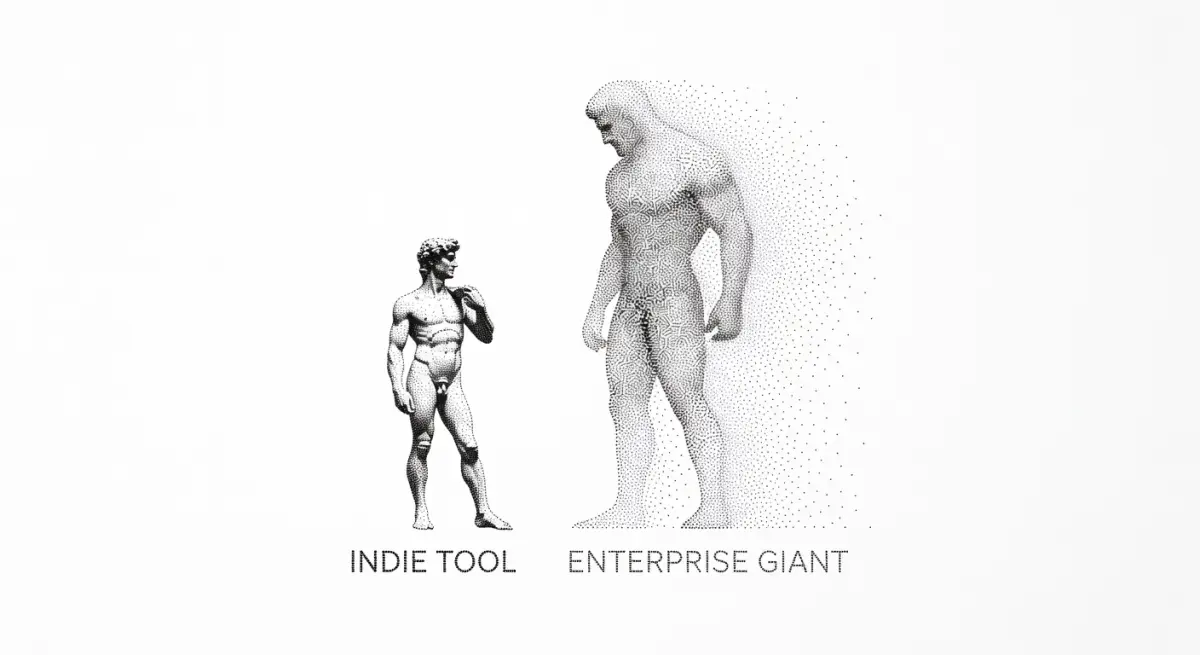
If you've looked into Cryptlex for licensing your software, you've probably noticed the pricing page. The free tier gives you 10 activations. Ten. And the moment you need more than that, you're looking at $50/month minimum. For a solo developer selling a FiveM script or a small team shipping an audio plugin, that's a hard pill to swallow.
Cryptlex is an enterprise product built for enterprise customers. If you search for "how to license a FiveM script" or "audio plugin licensing," you won't find Cryptlex anywhere. They're not growing outside the enterprise space because they're not built for it.
If you're shipping desktop apps, game mods, audio plugins, or scripts on Gumroad, Cryptlex is like renting a warehouse when you need a garage. Even if you're an established software company like Sketch, their complexity and pricing don't make sense unless you have a dedicated IT team to manage it.
This page explains exactly why LicenseSeat is the better fit for developers and small teams, how the two platforms compare, and how to switch if you're already on Cryptlex.
Where Cryptlex falls short for most developers
Cryptlex isn't a bad product. It's a mismatched one. Here's where it doesn't work for smaller teams and solo developers.
Enterprise pricing for non-enterprise teams
Cryptlex's pricing is designed for companies licensing commercial software at scale. Here's the reality for most developers:
- Free tier: 10 activations. That's enough to test, not to launch.
- Developer plan: $50/month for 500 activations. If your script sells for $10 on Gumroad, you need 5 sales just to cover your licensing costs.
- Startup plan: $100/month for 1,000 activations, which is where you first get offline activations and hosted floating licenses.
Compare that to selling 50 copies of a $10 script: you've made $500, but $50 goes straight to Cryptlex before you've paid for hosting, payment processing, or your own time. The economics only work if you're selling expensive enterprise software or have venture-backed runway to burn.
Complex integration
Cryptlex uses a client library called LexActivator. It works, but the integration path involves downloading platform-specific binaries, configuring product files, and handling a multi-step activation flow with callbacks and status codes.
For their payment integrations, you need to deploy a separate integration script (either self-hosted or through Cryptlex's managed hosting, which costs extra). Then you configure webhooks manually in Stripe's dashboard, add signing secrets, and map product IDs between systems. It's a real project.
If you've built enterprise software before, this is familiar territory. If you're a Lua developer selling FiveM scripts, a C++ developer shipping a JUCE audio plugin, or a small team that just wants licensing to work, it's an unnecessary barrier.
Limited payment integrations
Cryptlex natively supports Stripe and FastSpring, both through webhook-based integration scripts you deploy yourself. They also have an invite-only Zapier integration for connecting to other services. But there's no native Gumroad integration, no LemonSqueezy integration.
For many developers, this is a dealbreaker. Gumroad and LemonSqueezy are where a lot of software sales happen, especially for solo developers and small teams. If you sell through either of these platforms, Cryptlex offers no way to automatically generate and deliver license keys to your customers. You're back to manual key generation or building your own webhook automation from scratch.
Overkill feature set
Cryptlex supports feature-based licensing, usage-based licensing, identity-based licensing, floating licenses with on-premise servers, SAML 2.0 SSO, reseller portals, custom roles, and audit logs.
These are genuine enterprise features. They're also features that the vast majority of developers and small teams will never touch. You're paying for complexity you don't use, and that complexity leaks into the product's interface, documentation, and integration experience.
Auto-upgrade billing
If you exceed your plan's activation limit, Cryptlex automatically upgrades you to the next tier. That means your bill can jump from $50 to $100 to $200 without you explicitly approving it. For any business watching margins, surprise billing is a real concern.
No community, no ecosystem
Browse Cryptlex's website and documentation. You'll find technical reference docs aimed at enterprise integration teams. You won't find tutorials for FiveM developers, guides for audio plugin creators, or content explaining how developers actually ship licensed software.
There's no ecosystem here. No community forums with active developers, no content explaining how to license game mods or scripts. They don't create that content because that's not their audience.
Why LicenseSeat is the better choice
LicenseSeat is built for developers and teams who sell FiveM scripts, Minecraft plugins, Discord bots, game mods, desktop apps, audio plugins, and any software that runs on customer machines. Whether you're a solo developer or a growing company like Sketch, here's how it compares.
Pricing that scales with your business
LicenseSeat's pricing is designed for real software businesses:
- Free tier (Hobby): 100 devices. That's 10x what Cryptlex offers, and enough to validate your product with real customers before spending anything.
- Indie: $9/month for 500 devices. Compare that to Cryptlex's $50/month for 500 activations.
- Starter: $29/month for 1,500 devices.
- Pro and beyond: Scales up to enterprise-level volume without enterprise-level complexity.
At every tier, LicenseSeat costs a fraction of what Cryptlex charges. The $41/month you save on the Indie plan alone pays for your Gumroad subscription and then some.
Native payment integrations
LicenseSeat connects directly to Stripe, Gumroad, and LemonSqueezy (with FastSpring support on the roadmap). When someone buys your software, a license key is automatically generated and delivered. No separate integration scripts, no manual webhook configuration, no deployment step.
This is the difference between "set it up in 5 minutes" and "set aside an afternoon." For Cryptlex's Stripe integration alone, you need to deploy a script, configure webhook endpoints, select specific events, and provide signing secrets. With LicenseSeat, you connect your Stripe account and you're done.
One-call integration
Cryptlex's LexActivator requires downloading platform-specific binaries, configuring product files, and implementing a multi-step activation flow. LicenseSeat's integration is a single API call: activate(key). That's it.
For FiveM scripts (Lua), Roblox scripts (Lua), and Minecraft plugins (Java), you call the REST API directly. For desktop apps, LicenseSeat provides native SDKs:
- Swift for macOS and iOS apps
- C# for Unity games, Windows apps, .NET applications
- C++ for Unreal Engine, JUCE audio plugins, native desktop apps
- JavaScript/TypeScript for Electron apps and Node.js tools
The software licensing API is straightforward: one endpoint for activation, one for validation, one for deactivation.
Cryptlex's documentation is technical reference material, not practical integration guides. If you're looking for a tutorial that walks you through licensing your specific type of software, you won't find it there.
Device fingerprinting
Both Cryptlex and LicenseSeat offer HWID-based device fingerprinting. Cryptlex uses their own fingerprinting algorithm with configurable accuracy levels. LicenseSeat uses stable machine fingerprints with server-side activation tracking and seat enforcement.
The key difference: LicenseSeat's fingerprinting is designed for the kinds of software real developers build. Game mods running on customer PCs, audio plugins in DAW environments, professional macOS apps like Sketch, scripts running on game servers. The fingerprinting works across all these scenarios without configuration.
No feature bloat
LicenseSeat does software licensing and does it well. License key management, device fingerprinting, seat limits, activation portals, payment integrations, and file distribution with auto-updates. Everything you need, nothing you don't.
You won't find SAML SSO, reseller portals, or on-premise floating license servers. If you need those enterprise features, Cryptlex might genuinely be the better choice. But if you need to license a FiveM script or an audio plugin, those features are just noise.
Feature comparison
| Feature | LicenseSeat | Cryptlex |
|---|---|---|
| License key management | ||
| Device fingerprinting | Stable cross-platform fingerprints | Configurable accuracy levels |
| Node-locked licensing | ||
| Floating licenses | (paid tiers) | |
| Feature-based licensing | ||
| Usage-based licensing | ||
| Activation portal | Yes, whitelabeled | (customer portal) |
| Stripe integration | Native | Webhook + deployment script |
| Gumroad integration | Native | |
| LemonSqueezy integration | Native | |
| FastSpring integration | Coming soon | Webhook + deployment script |
| File distribution | CDN-hosted with auto-update | Release management |
| SAML SSO | (Business plan+) | |
| Reseller portal | (Business plan+) | |
| Audit logs | (Business plan+) | |
| On-premise deployment | ||
| Integration complexity | Single activate() call |
LexActivator library + config |
| Free tier | 100 devices | 10 activations |
The features Cryptlex has that LicenseSeat doesn't are enterprise features: floating licenses, usage-based licensing, SAML SSO, reseller portals. If you're a software company with 50+ employees and compliance requirements, those matter. If you're selling through Gumroad, running a small software shop, or even a growing company that doesn't need corporate IT infrastructure, they don't.
Pricing comparison
| LicenseSeat | Cryptlex | |
|---|---|---|
| Free | 100 devices (Hobby) | 10 activations |
| ~500 activations | $9/mo (Indie) | $50/mo (Developer) |
| ~1,500 activations | $29/mo (Starter) | $100/mo (Startup, 1,000 activations) |
| ~10,000 activations | Custom | $200/mo (Small Business) |
At the 500-activation tier, LicenseSeat costs 82% less than Cryptlex. At the next tier up, it's 71% less. The gap narrows at enterprise scale, but if you're at enterprise scale, you're comparing different products anyway.
The real question: does it make sense to spend $50/month on licensing when you're making $200/month in sales? With LicenseSeat at $9/month, your licensing costs stay proportional to your revenue.
For desktop app teams
If you're building macOS apps, Windows applications, or cross-platform desktop software, both Cryptlex and LicenseSeat can handle your licensing. The difference is in the integration experience.
Cryptlex requires you to download their LexActivator library, bundle it with your application, configure a product file, and implement their activation flow. It's thorough, but it's also a lot of moving parts.
LicenseSeat's approach: add the SDK (Swift for macOS, C# for Windows/.NET, C++ for native apps), call activate() on startup, done. The SDK handles fingerprinting, server communication, and offline caching internally.
For developers using frameworks like Electron or Tauri, LicenseSeat's JavaScript/TypeScript SDK integrates directly. No native library bundling required.
For audio plugin developers
JUCE developers, VST/AU plugin creators, and anyone building audio software: licensing audio plugins has unique challenges. Plugins run inside a host (your DAW), which means the licensing check needs to be fast, non-blocking, and reliable across different hosts and operating systems.
LicenseSeat's C++ SDK is built for this exact scenario. The activation check happens once, the result is cached locally, and your plugin doesn't call home every time the user opens their project. Cross-platform hardware fingerprinting works correctly across macOS and Windows without manual platform-specific configuration.
Cryptlex can handle this too, but you're paying $50/month minimum for it. If your plugin sells for $49 on your website, you need to sell one copy every month just to break even on licensing costs. Even established plugin companies feel this squeeze. And Cryptlex provides zero content about audio plugin licensing; no JUCE tutorials, no VST integration guides, nothing. You're on your own with their generic documentation.
For game mod and script developers
FiveM scripts, Minecraft plugins, Roblox scripts, Discord bots: this is where LicenseSeat has the clearest advantage.
Many developers in this space sell through Gumroad, LemonSqueezy, or BuiltByBit. Cryptlex doesn't integrate with any of these. You'd need to build custom automation or generate keys manually for every sale.
Search Cryptlex's documentation for "FiveM" — zero results. Search for "Minecraft" — zero results. Search for "Roblox" — zero results. They don't serve this market, and they're not trying to.
With LicenseSeat:
- Sell your script on Gumroad or LemonSqueezy
- LicenseSeat automatically generates and delivers the license key
- Your script calls the LicenseSeat API on load to validate
- Invalid keys don't work
No manual key generation. No webhook scripting. No deployment of integration services. The entire flow is automated from purchase to activation.
For HWID locking (preventing key sharing), LicenseSeat's machine fingerprinting combined with seat limits gives you precise control over how your software gets used. One key per server, two keys per machine, team licenses with device limits; whatever model works for your product.
Migrating from Cryptlex
If you're currently on Cryptlex, switching to LicenseSeat is straightforward:
Sign up for LicenseSeat (free tier, 100 devices, no credit card). Create your product.
Connect your payment processor. If you use Gumroad or LemonSqueezy, new sales will automatically generate LicenseSeat keys. If you use Stripe, connect your account directly; no integration script needed.
Swap the SDK. Replace LexActivator with LicenseSeat's SDK. The integration is simpler: a single
activate(key)call instead of the multi-step LexActivator flow.-
Migrate existing customers. Two approaches:
- Clean cut: Generate new LicenseSeat keys for existing customers, send them out, sunset Cryptlex.
- Parallel run: Use LicenseSeat for new sales, keep Cryptlex for existing customers, phase out over 30-90 days.
Test everything. Verify activation, device limits, and validation before shipping to production.
The migration typically takes a few hours. The integration swap is usually the quickest part; deciding how to handle existing customer keys takes the most thought.
When Cryptlex is the right choice
To be fair: Cryptlex is the better option if you need enterprise licensing features. Specifically:
- Floating licenses for concurrent-use scenarios (engineering teams sharing limited seats)
- Feature-based licensing where different license tiers unlock different capabilities
- On-premise deployment for air-gapped environments
- SAML SSO for enterprise customer requirements
- Audit logs for compliance
If your customers are enterprises with procurement departments and compliance requirements, Cryptlex is built for you. LicenseSeat is not trying to compete in that space.
But be honest with yourself: do you actually need floating licenses? Do your customers require SAML SSO? If you're selling a $29 FiveM script, a $49 audio plugin, or even a $199 professional desktop app, the answer is probably no. You need license keys, device fingerprinting, and payment integration. Everything else is enterprise theater.
The bottom line
Cryptlex is a legitimate enterprise licensing platform with a price tag and complexity to match. Their content doesn't address most developers, and their pricing starts at $50/month for features you'll never use.
If you're selling FiveM scripts, Minecraft plugins, audio plugins, desktop apps, or any software where your customers are individuals or small businesses (not Fortune 500 enterprises), Cryptlex is the wrong tool for the job.
LicenseSeat gives you everything you actually need: license key management, stable device fingerprinting, native payment integrations with the platforms your customers actually use, and an integration that takes minutes instead of hours. At a fifth of the price. With documentation and guides written for the software you're actually building.
Whether you're a solo developer shipping your first product or a growing company like Sketch that needs professional licensing without enterprise overhead, LicenseSeat scales with you.
Start with the free tier (100 devices, no credit card required). If you're currently on Cryptlex's $50/month Developer plan, you can switch to LicenseSeat's $9/month Indie plan and get the same number of activations with better payment integrations. That's $41/month back in your pocket, every month.